SketchUp does not natively import OBJ (Wavefront) files - at least not without plugins or workarounds. If you're trying to bring a model from Blender, Maya, 3ds Max, or any other application that exports OBJ into SketchUp, you need to convert the OBJ file to SKP format first.
This guide shows how to convert OBJ to SKP in four steps using Autoconverter, with built-in mesh repair to ensure clean geometry in the output SKP file. Reverse conversion from SKP back to OBJ is also supported.
Why SketchUp Can't Open OBJ Files Directly
SketchUp's native import options are limited. While newer versions of SketchUp Pro include some additional format support, OBJ import is either unavailable, requires a paid plugin, or produces poor results due to mesh topology issues in the source file. Converting the OBJ to SKP externally - before opening it in SketchUp - gives you a cleaner, more reliable import with full control over mesh quality.
Autoconverter handles this conversion as a standalone Windows application, with no SketchUp installation required on the machine doing the conversion.
How to Convert OBJ to SKP: Step-by-Step
📥 Download and Install Autoconverter
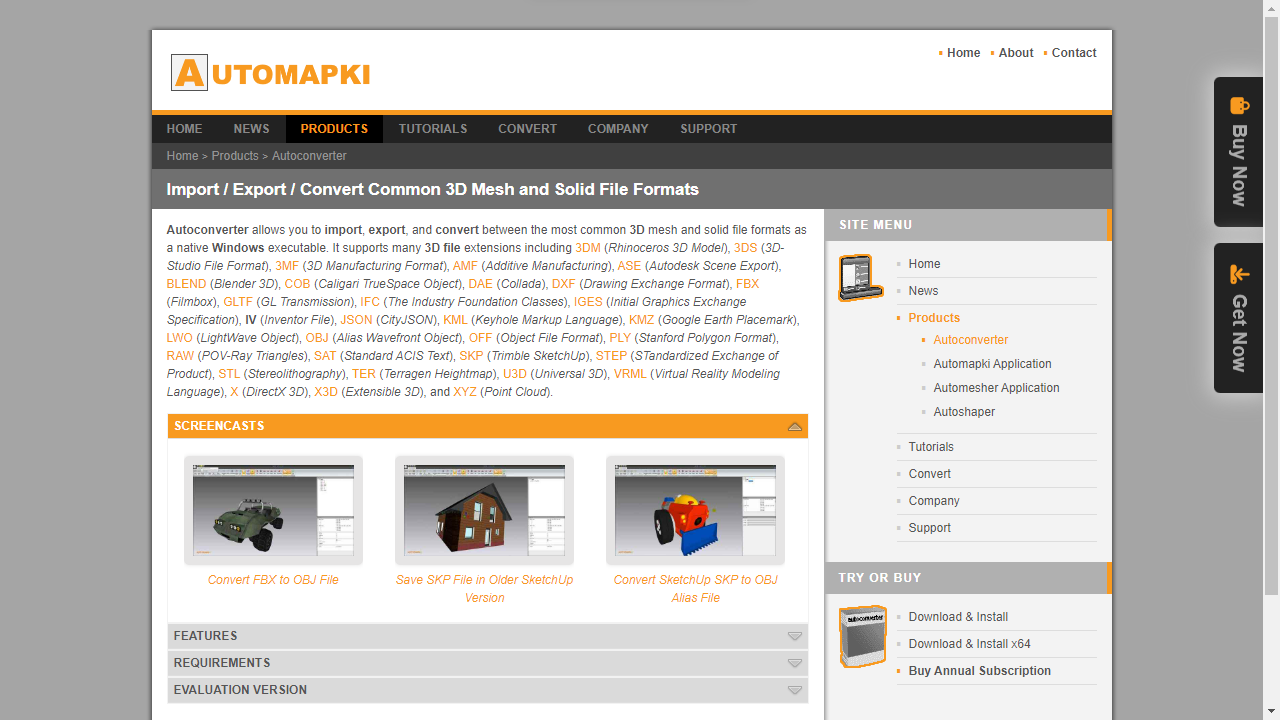
Download Autoconverter and install it on Windows. It supports OBJ, SKP, STL, FBX, STEP, DAE, 3DM, and many other 3D formats - all in one application with no additional plugins.
📂 Open Your OBJ File
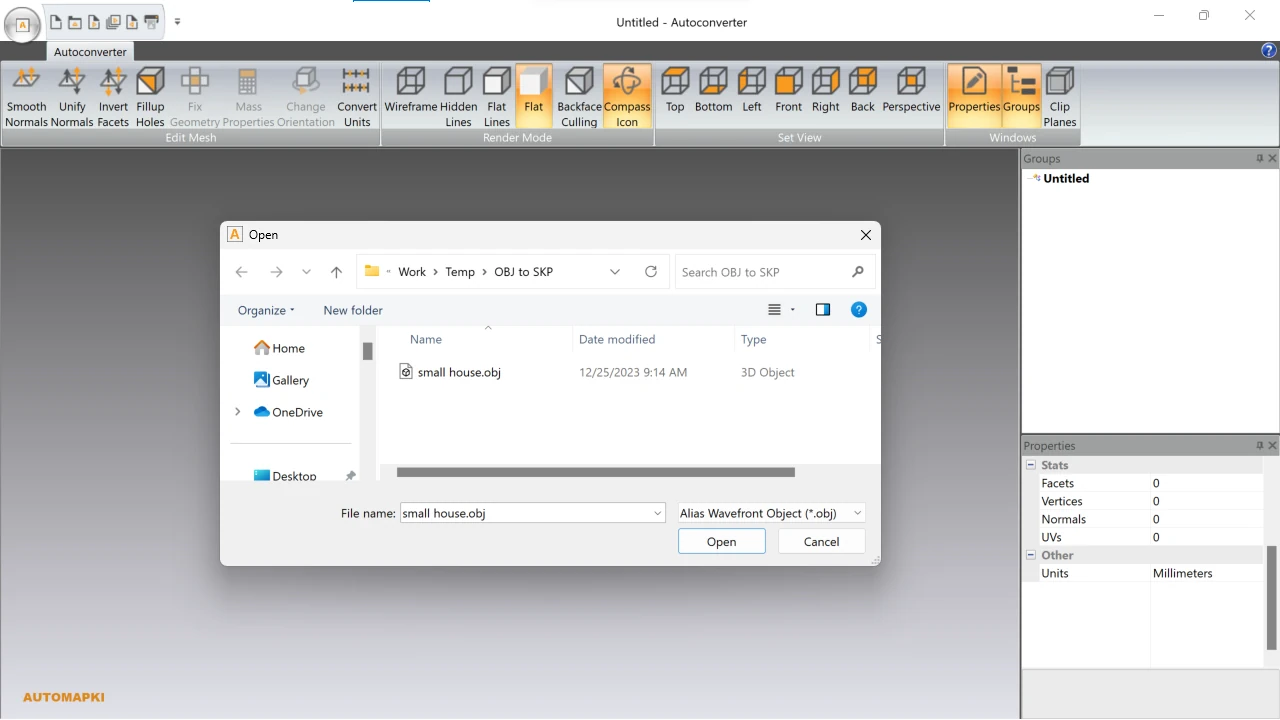
Click Open… and select your .obj file, or drag and drop it into the application window. Autoconverter automatically reads the accompanying .mtl material file if it is in the same folder, loading colors and texture assignments alongside the geometry.
🔧 Fix Mesh Issues Before Export
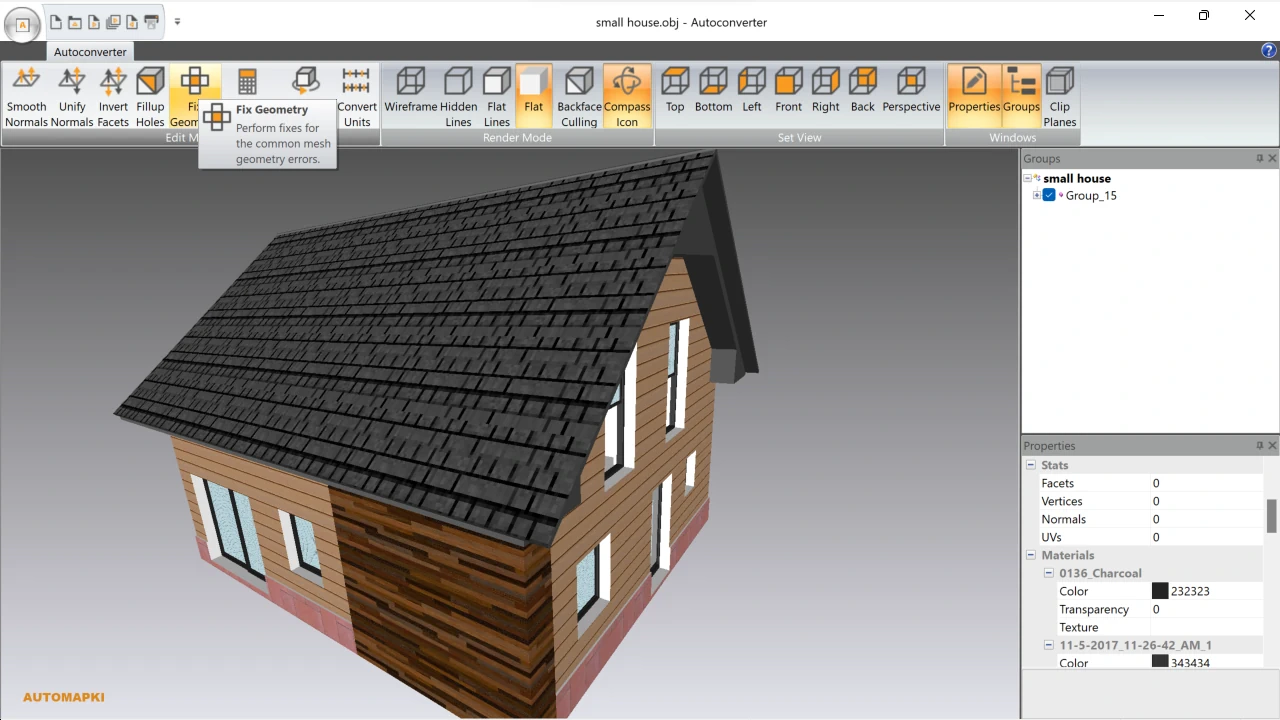
OBJ files exported from Blender, Maya, or online model repositories frequently contain mesh errors that cause problems in SketchUp - most commonly reversed face normals, which make surfaces appear inside-out, and open edges that create non-solid geometry.
Before exporting, use Autoconverter's built-in mesh repair tools to fix these issues:
- Fix Geometry detects and repairs non-manifold edges, degenerate faces, and winding order errors that would cause display problems in SketchUp.
- Fill Holes closes gaps in open meshes, which is especially useful for models downloaded from 3D repositories that weren't originally intended for SketchUp use.
Skipping this step is the most common reason OBJ-to-SKP conversions produce geometry with missing or reversed faces inside SketchUp.
💾 Export to SKP Format
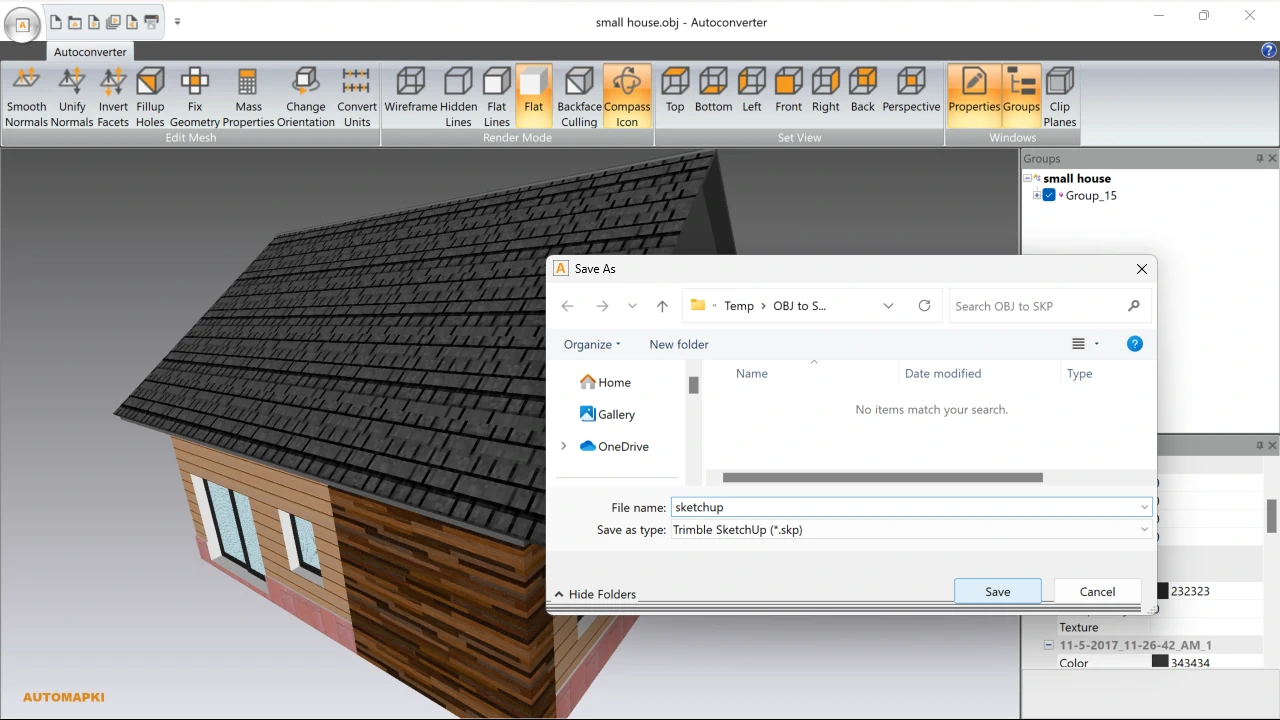
Click Save As…, select SketchUp (*.skp) from the file type dropdown, choose your output filename and destination, and click Save. The converted SKP file can be opened directly in any version of SketchUp.
If you need the file in a specific older SketchUp version, Autoconverter also supports SKP version selection at export - from SketchUp 3 through the latest release.
Common OBJ to SKP Use Cases
- Blender to SketchUp - export a model from Blender as OBJ and convert to SKP for use in SketchUp architectural presentations
- 3D model libraries - most free 3D model sites (TurboSquid, Free3D, CGTrader) distribute models in OBJ format; converting to SKP brings them into your SketchUp project
- Maya and 3ds Max to SketchUp - convert OBJ exports from Autodesk tools into SKP for client presentations or SketchUp-based design reviews
- Product visualization - convert manufacturer-supplied OBJ product models into SKP components for use in SketchUp interior and architectural scenes
- 3D printing to design - repurpose STL/OBJ models originally made for 3D printing as editable SketchUp geometry
Frequently Asked Questions
-
Does converting OBJ to SKP require SketchUp to be installed?
No. Autoconverter reads and writes SKP files natively - no SketchUp installation is needed on the machine performing the conversion.
-
Will textures from the OBJ file appear in SketchUp after conversion?
Yes, provided the MTL file and all referenced texture images are in the same folder as the OBJ file when you open it in Autoconverter. The textures are embedded into the output SKP file and will display correctly when the SKP is opened in SketchUp.
-
Which SketchUp version will the output SKP file be compatible with?
By default, Autoconverter exports to a recent SKP version. If you need compatibility with an older SketchUp release, you can select the target version in the save dialog - supported versions range from SketchUp 3 through the latest release.
-
Can I also convert SKP back to OBJ?
Yes. Autoconverter supports bidirectional conversion between OBJ and SKP. To convert SKP to OBJ, open the SKP file and export it with OBJ selected as the output format. This is useful when you need to bring a SketchUp model into Blender, a game engine, or a rendering pipeline that doesn't support SKP.
-
How many OBJ files can I convert for free?
The free evaluation version of Autoconverter supports up to 10 file conversions. The full licensed version provides unlimited conversions and adds batch processing for entire folders of OBJ files.
Summary
Converting OBJ to SKP gives you a clean, SketchUp-native version of any Wavefront model - with textures, materials, and geometry intact. Autoconverter handles the full pipeline in four steps, including mesh repair that prevents the reversed-face and missing-geometry issues that affect most OBJ-to-SKP workflows.
👉 Ready to convert? Download Autoconverter and try it free for up to 10 conversions.