FBX (Filmbox) is the standard interchange format for animation, rigging, and game engine pipelines - but it is not universally supported across all 3D tools. OBJ (Wavefront) is far more portable: virtually every 3D application on any platform can open an OBJ file.
This guide shows how to convert FBX to OBJ in four steps using Autoconverter, with full preservation of mesh geometry, materials, and textures. Batch conversion of multiple FBX files is also supported in the full version.
When Do You Need to Convert FBX to OBJ?
FBX is a proprietary Autodesk format. While Maya, 3ds Max, and Unity handle it natively, many other tools have limited or no FBX support. Converting to OBJ solves compatibility issues in several common workflows.
Blender can import FBX but often produces incorrect results with complex rigs, material setups, or older FBX versions - OBJ is a cleaner import path for geometry-only transfers. SketchUp does not support FBX import at all without third-party plugins, but opens OBJ files readily. Web-based 3D viewers, model repositories like Sketchfab, and lightweight tools like MeshLab all work reliably with OBJ but may struggle with FBX. For archival or sharing purposes, OBJ is also preferable since it is a plain-text open format with no proprietary dependencies.
How to Convert FBX to OBJ: Step-by-Step
📥 Download and Install Autoconverter
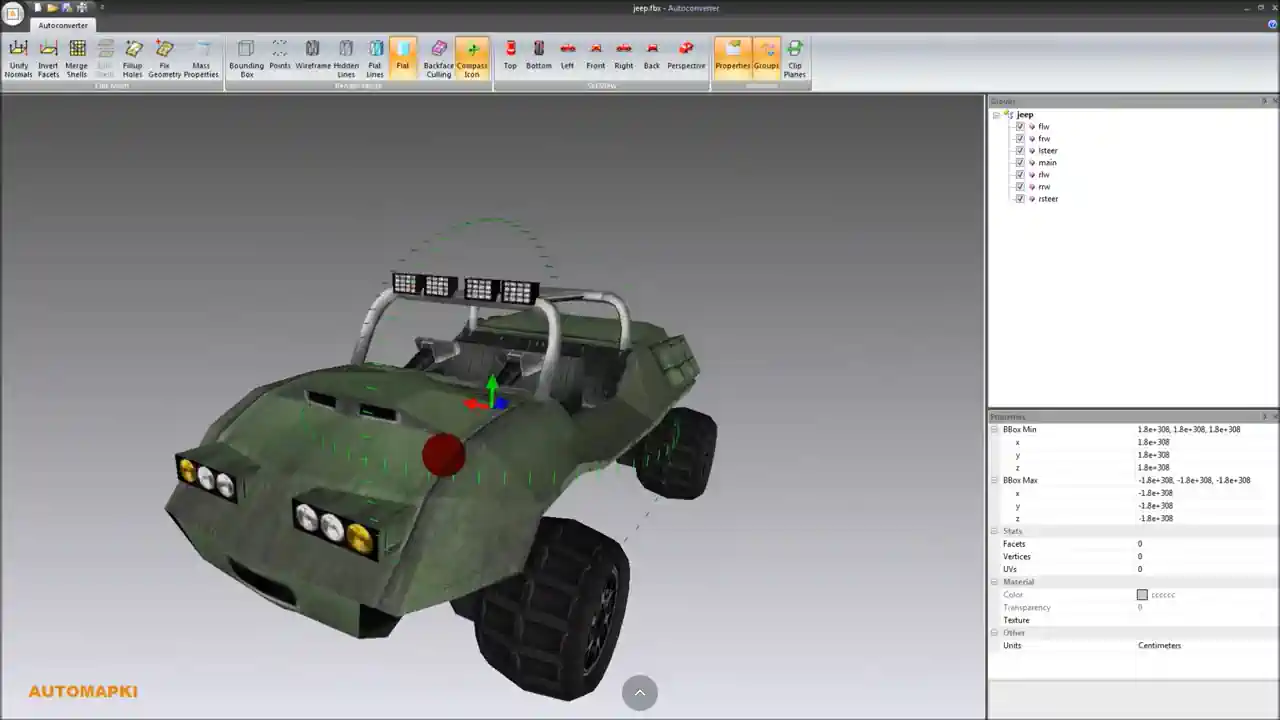
Download Autoconverter and install it on Windows. It supports FBX, OBJ, STL, SKP, STEP, DAE, 3DM, and many other 3D formats - all in a single application with no extra plugins.
🚀 Launch Autoconverter
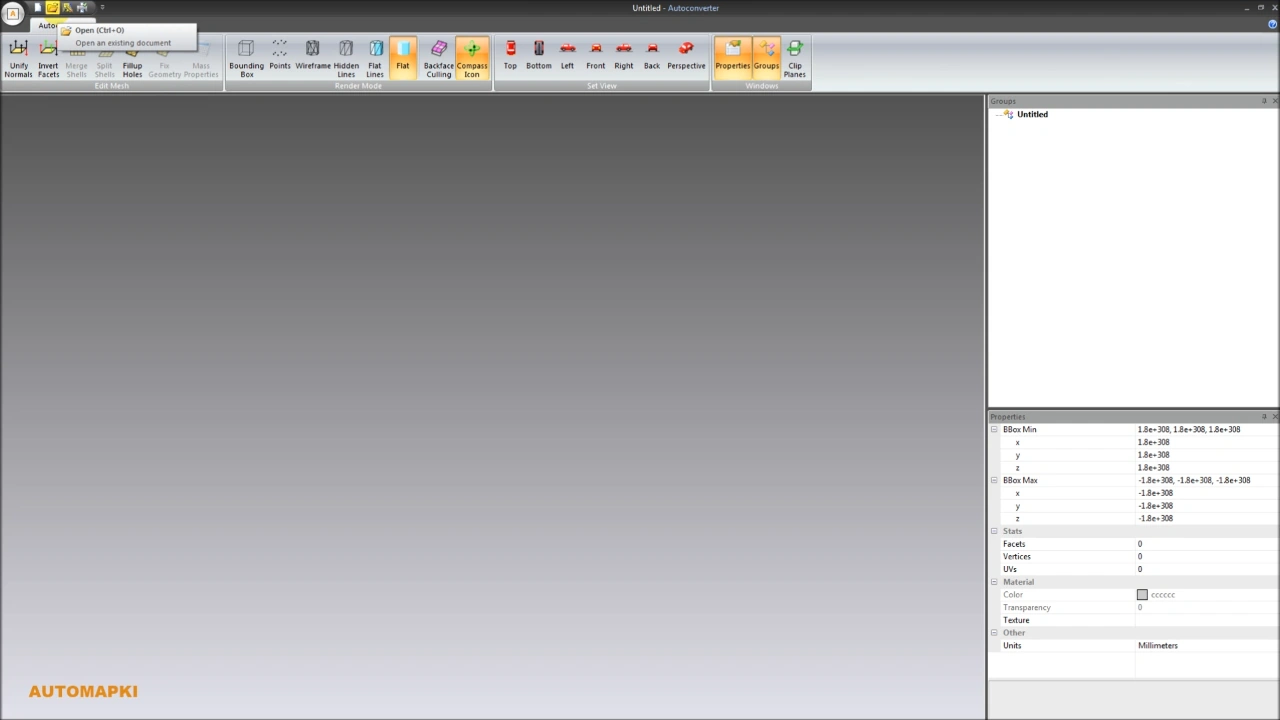
Open Autoconverter from the Windows Start menu. The interface includes a 3D viewport for previewing your model before conversion, a ribbon bar for common actions, and a properties panel for inspecting geometry and material data.
📂 Open Your FBX File
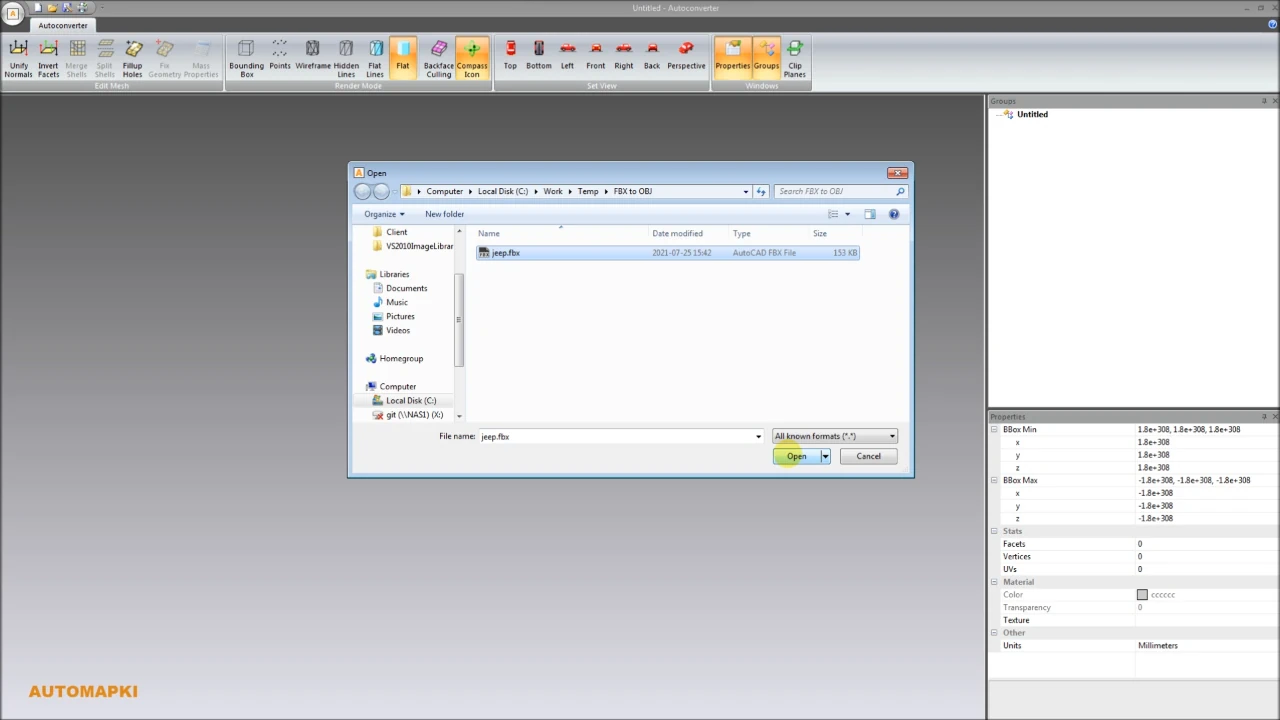
Click Open… and select your Filmbox FBX (*.fbx) file, or drag and drop it directly into the 3D viewport. Autoconverter loads the mesh geometry along with embedded materials and textures so you can inspect the model before exporting.
Both ASCII and binary FBX formats are supported, as well as FBX files from all major FBX versions produced by Maya, 3ds Max, Unity, Unreal Engine, and other applications.
📥 Export to OBJ Format
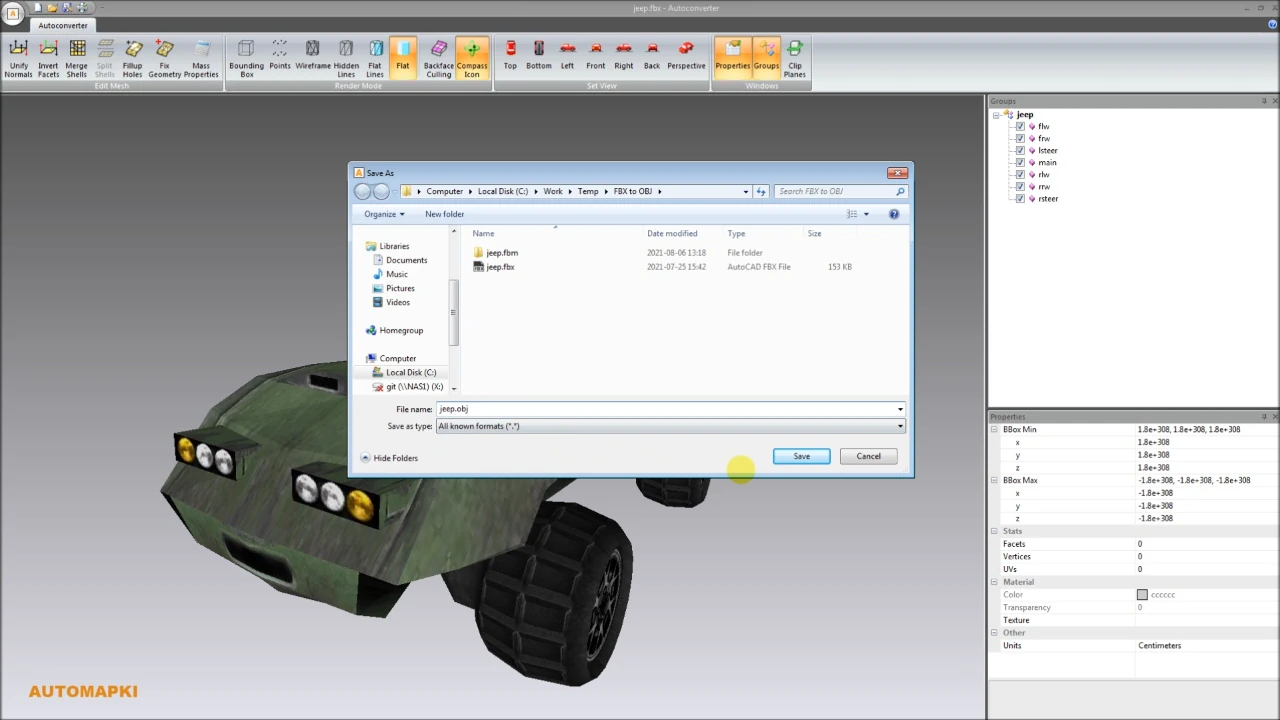
Click Save As…, select Wavefront OBJ (*.obj) from the file type dropdown, choose your output filename and destination folder, then click Save. Autoconverter writes the OBJ file alongside an MTL material file and any referenced texture images - keep all three in the same folder for correct material display in the target application.
Frequently Asked Questions
-
Will textures from the FBX file appear correctly in the OBJ output?
Yes, provided the textures are embedded in the FBX or accessible at their referenced paths. Autoconverter exports them as separate image files alongside the OBJ and references them in the MTL file. When importing the OBJ into Blender, Maya, or another application, keep the OBJ, MTL, and texture files in the same folder.
-
Does converting FBX to OBJ preserve animation?
No. OBJ is a static geometry format and cannot store animation, rigs, or blend shapes. The exported OBJ represents the mesh in its default or bind pose. If you need to preserve animation, export to DAE or GLTF instead.
-
Can I convert FBX files from Unity or Unreal Engine to OBJ?
Yes. FBX files exported from Unity or Unreal Engine are standard Autodesk FBX and are fully supported by Autoconverter.
-
Can I also convert OBJ back to FBX?
Yes. Autoconverter supports both directions - open an OBJ file and use Save As… to export it as FBX. This is useful for bringing OBJ assets into game engines or Autodesk tools that prefer FBX.
-
Is there a free version of Autoconverter?
Yes. The free evaluation version supports up to 10 file conversions with no time limit. The full licensed version provides unlimited conversions and batch processing.
Summary
Converting FBX to OBJ is the most practical way to move 3D geometry from Autodesk and game engine workflows into tools that don't support FBX natively. Autoconverter handles the conversion in four steps, preserving mesh geometry, materials, and textures, and producing OBJ output that opens cleanly in Blender, SketchUp, MeshLab, and any other OBJ-compatible application.
👉 Ready to convert? Download Autoconverter and try it free for up to 10 conversions.