The 3MF format is excellent for 3D printing, but many 3D modeling, rendering, and game development tools don't support it natively. OBJ (Wavefront Object) is the opposite - it's one of the most universally accepted 3D formats, supported by Blender, Autodesk Maya, 3ds Max, Cinema 4D, Unity, Unreal Engine, and virtually every other 3D application.
This guide explains how to convert 3MF to OBJ in four steps using Autoconverter, with full preservation of mesh geometry, colors, and texture data.
What Is the 3MF Format and Why Convert It?
3MF (3D Manufacturing Format) was designed specifically for 3D printing workflows. It stores mesh geometry, material properties, colors, and print settings in a single compressed file - making it more capable than STL for print preparation. However, outside of slicing software and a handful of CAD tools, 3MF support is limited.
OBJ, by contrast, has been an industry standard for 3D asset interchange since the 1990s. It is supported by every major DCC (digital content creation) tool and game engine, making it the practical choice whenever you need to move a 3D model between applications that aren't part of a 3D printing pipeline.
How to Convert 3MF to OBJ: Step-by-Step
📥 Download and Install Autoconverter
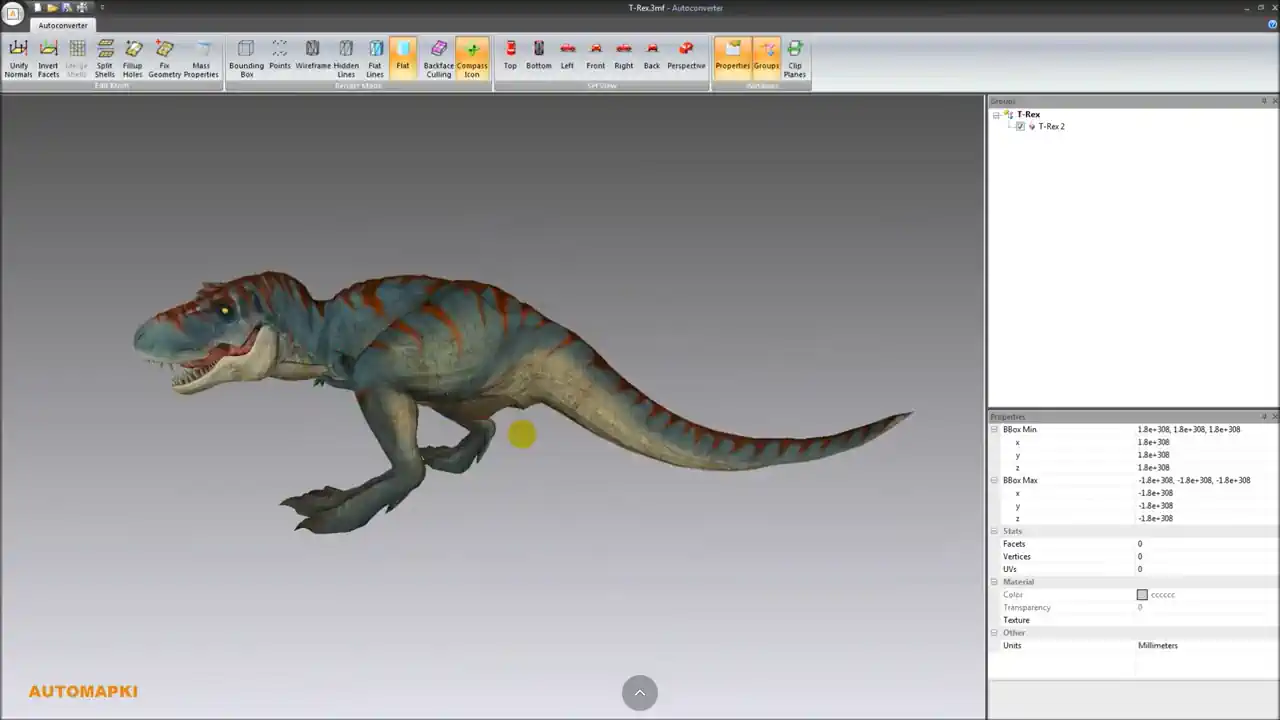
Download Autoconverter and install it on Windows. It supports a wide range of 3D formats including 3MF, OBJ, STL, FBX, STEP, DAE, and more - no separate plugins or format packs needed.
🚀 Launch Autoconverter
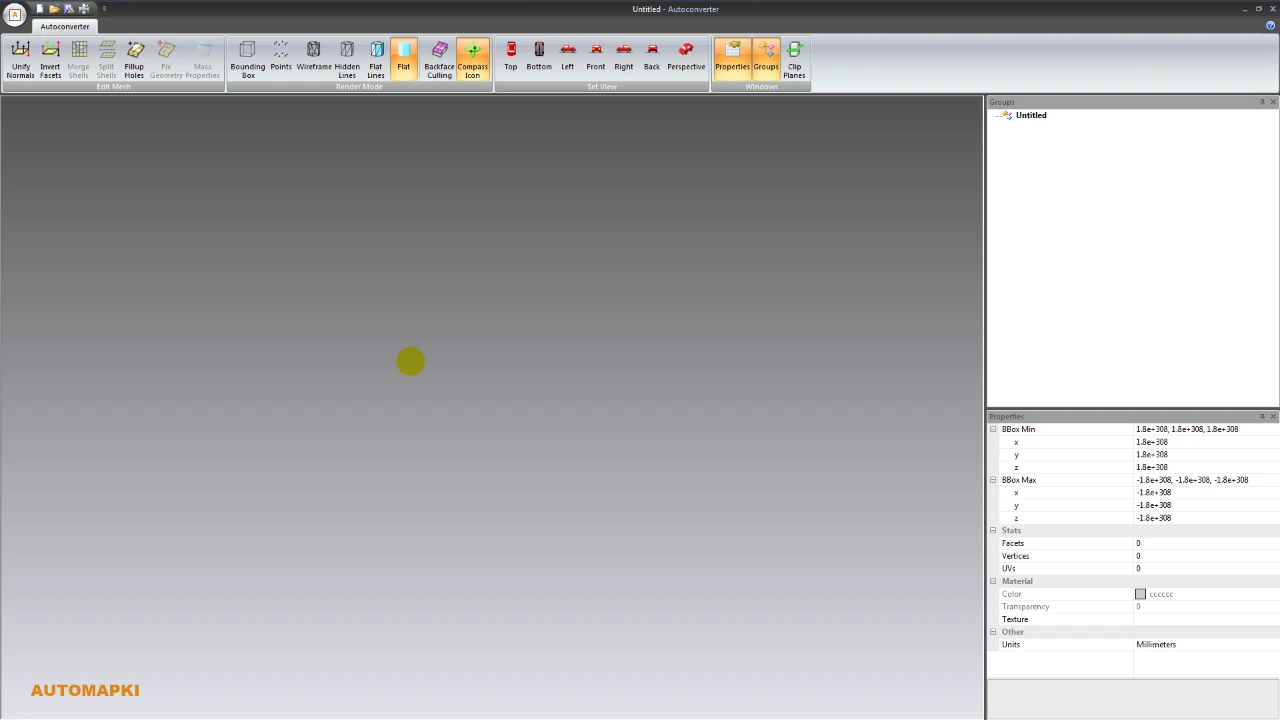
Open Autoconverter from the Windows Start menu. The interface includes a ribbon bar, properties panel, and an integrated 3D viewport for previewing models before conversion.
📂 Open Your 3MF File
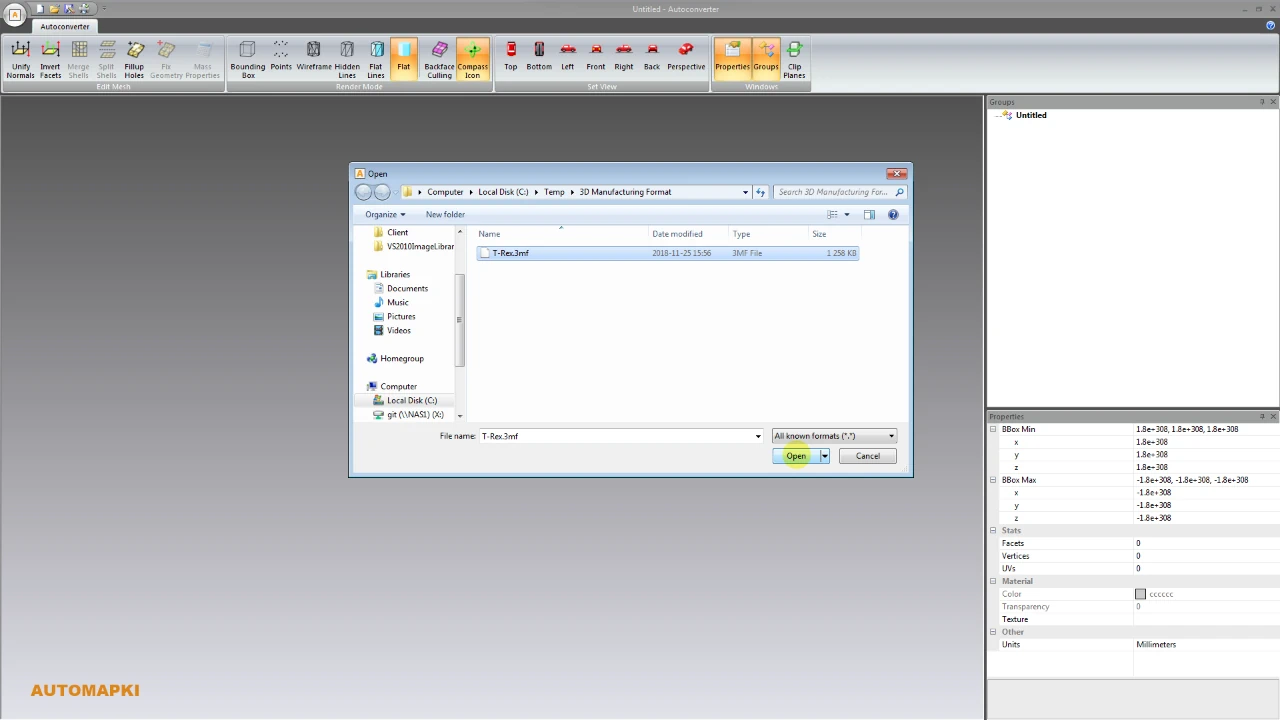
Click Open… and select your 3D Manufacturing Format (*.3mf) file, or drag and drop it directly into the application window. The model loads into the 3D viewport - inspect the geometry, colors, and component structure before proceeding.
💾 Export to OBJ Format
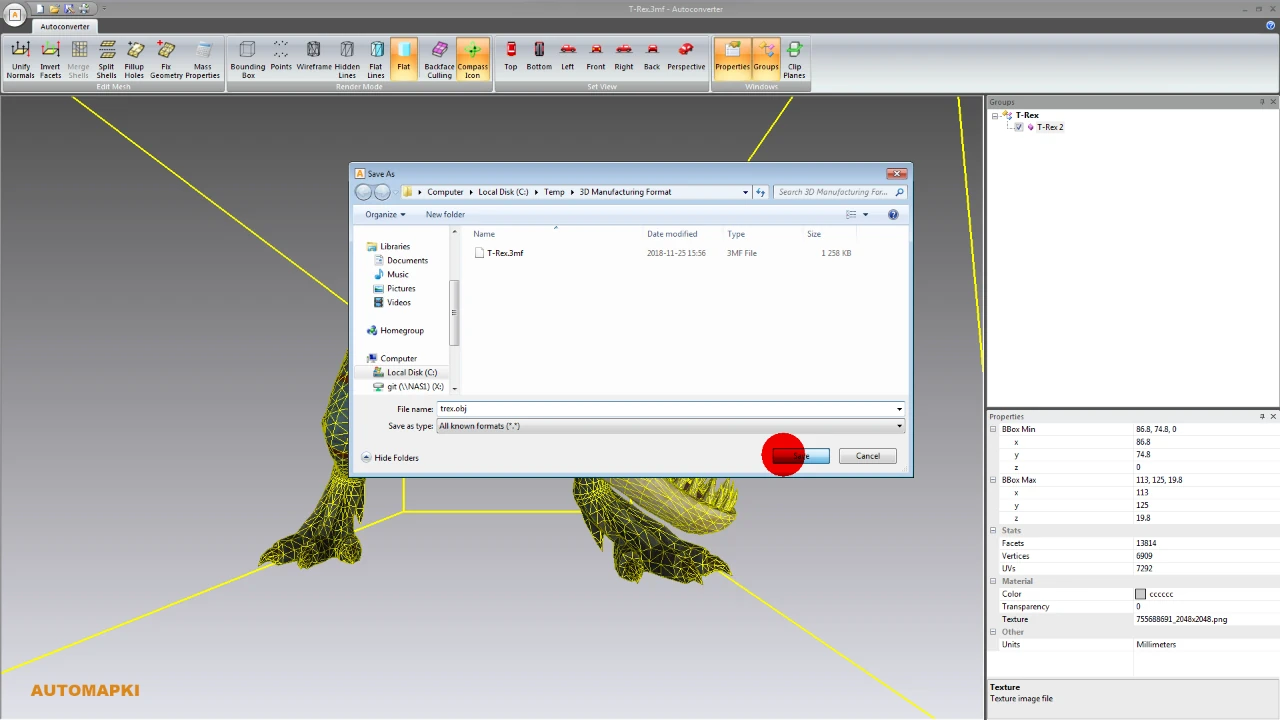
Click Save As…, select Alias Wavefront Object (*.obj) from the file type dropdown, choose your output filename and destination, then click Save. Autoconverter writes the OBJ file along with an accompanying MTL material file that carries color and texture references - both files are needed for the model to display correctly in the target application.
What Gets Preserved When Converting 3MF to OBJ?
Autoconverter preserves the following data from 3MF to OBJ during conversion:
- Mesh geometry - all triangles and polygons from the 3MF file are carried over accurately to OBJ
- Colors - per-object color assignments are mapped to OBJ material groups in the accompanying MTL file
- Textures - texture maps embedded in the 3MF file are exported as separate image files referenced by the MTL file
- Component structure - 3MF geometry components (reusable instances) are preserved as separate named objects in the OBJ output
OBJ does not support animation, scene hierarchies, or 3D printing metadata (print settings, support structures). If these are needed, consider exporting to FBX or DAE formats instead.
Common 3MF to OBJ Use Cases
- Blender import - bring 3MF models into Blender for sculpting, rendering, or animation without losing color data
- Game engine assets - prepare 3D print models for use in Unity or Unreal Engine, where OBJ is a standard import format
- Rendering pipelines - export 3MF models to OBJ for use in V-Ray, KeyShot, or Cinema 4D render setups
- Cross-software collaboration - share models with teammates or clients whose tools don't support 3MF but reliably open OBJ
- Online 3D viewers - most web-based 3D viewers and model repositories (Sketchfab, etc.) accept OBJ but not 3MF
Frequently Asked Questions
-
Does converting 3MF to OBJ preserve textures?
Yes. Autoconverter exports texture maps from the 3MF file as separate image files and references them in the MTL file that accompanies the OBJ. When you import the OBJ into Blender, Maya, or another application, make sure the MTL and texture files are in the same folder as the OBJ for materials to load correctly.
-
Can I open the converted OBJ in Blender?
Yes. Blender supports OBJ import natively. Select the OBJ file - Blender will automatically load the MTL file if it is in the same directory.
-
Will the 3D print settings from the 3MF file be preserved in OBJ?
No. OBJ is a geometry-only format and has no concept of print settings, support structures, or slicer metadata. If you need to preserve print settings, keep the original 3MF file alongside the converted OBJ.
-
Can I also convert OBJ back to 3MF?
Yes. Autoconverter supports both directions - OBJ to 3MF conversion works the same way using Open… for the OBJ and Save As… for the 3MF output.
-
Is there a free version?
Yes - the free evaluation version of Autoconverter supports up to 10 file conversions. The full licensed version provides unlimited conversions and batch processing.
Summary
Converting 3MF to OBJ is the most practical way to move 3D print models into broader creative and engineering workflows. Autoconverter handles the conversion in four steps, preserving mesh geometry, colors, and textures, and producing OBJ output that opens cleanly in Blender, Maya, Unity, Unreal Engine, and other major 3D tools.
👉 Ready to convert? Download Autoconverter and try it free for up to 10 conversions.