COLLADA (DAE) is an XML-based 3D interchange format supported by many DCC tools, but it is not universally accepted - especially in game engines, slicers, and lightweight 3D viewers. OBJ is far more portable and opens in virtually every 3D application without compatibility issues.
This guide shows how to convert DAE to OBJ in four steps using Autoconverter, which also supports exporting the same DAE file to FBX, SKP, and 3DS from the same interface.
What Is the COLLADA DAE Format?
COLLADA (COLLAborative Design Activity) is an open XML-based standard originally developed by Sony for exchanging 3D assets between digital content creation tools. A .dae file can contain mesh geometry, materials, textures, scene hierarchy, animations, physics data, and camera and light definitions - making it one of the most feature-rich interchange formats available.
Despite its capabilities, DAE has limited support in some pipelines. Game engines like Unity and Unreal prefer FBX. SketchUp, MeshLab, and many online 3D viewers work better with OBJ. CAD applications often require STEP. Converting from DAE to a simpler or more specialized format is a routine part of most 3D workflows.
How to Convert DAE to OBJ: Step-by-Step
📥 Download and Install Autoconverter
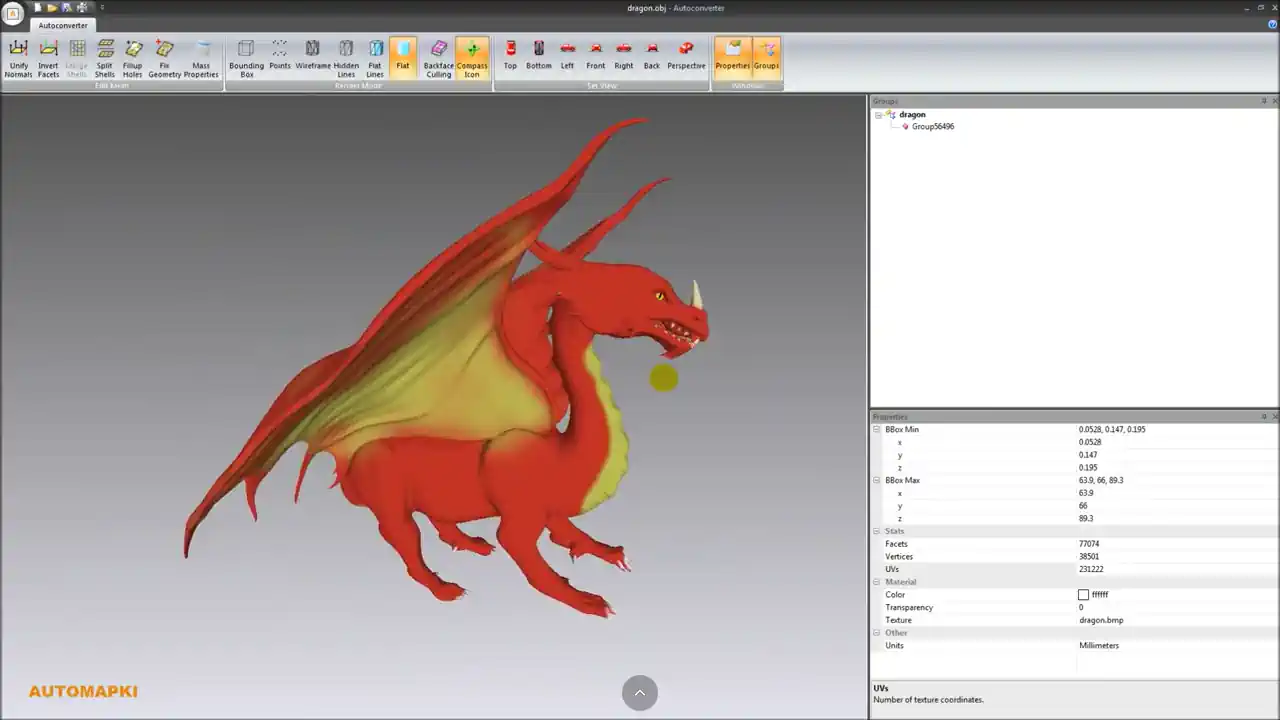
Download Autoconverter and install it on Windows. It supports DAE, OBJ, FBX, SKP, 3DS, STL, STEP, 3DM, and many other 3D formats - all in one application with no additional plugins required.
📂 Open Your DAE File
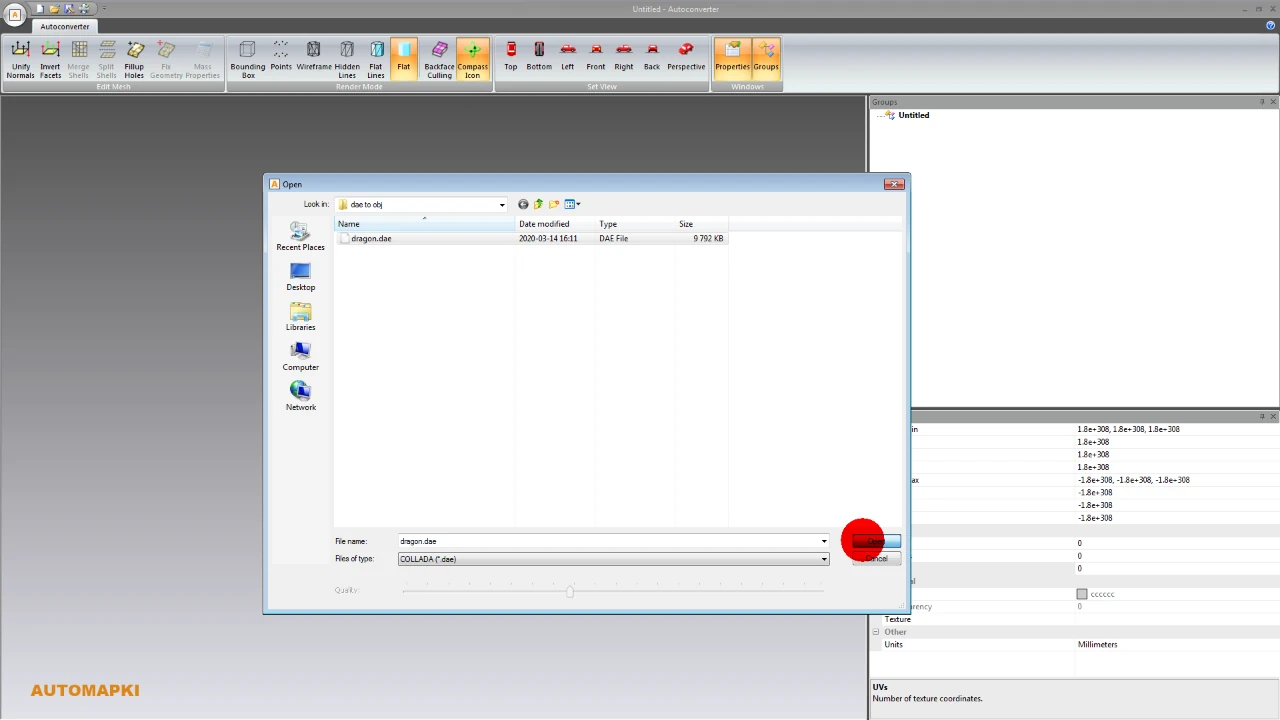
Click Open… and select your COLLADA .dae file, or drag and drop it directly into the application window. Autoconverter loads the mesh geometry along with embedded materials, textures, and scene structure for inspection before export.
📤 Export to OBJ Format
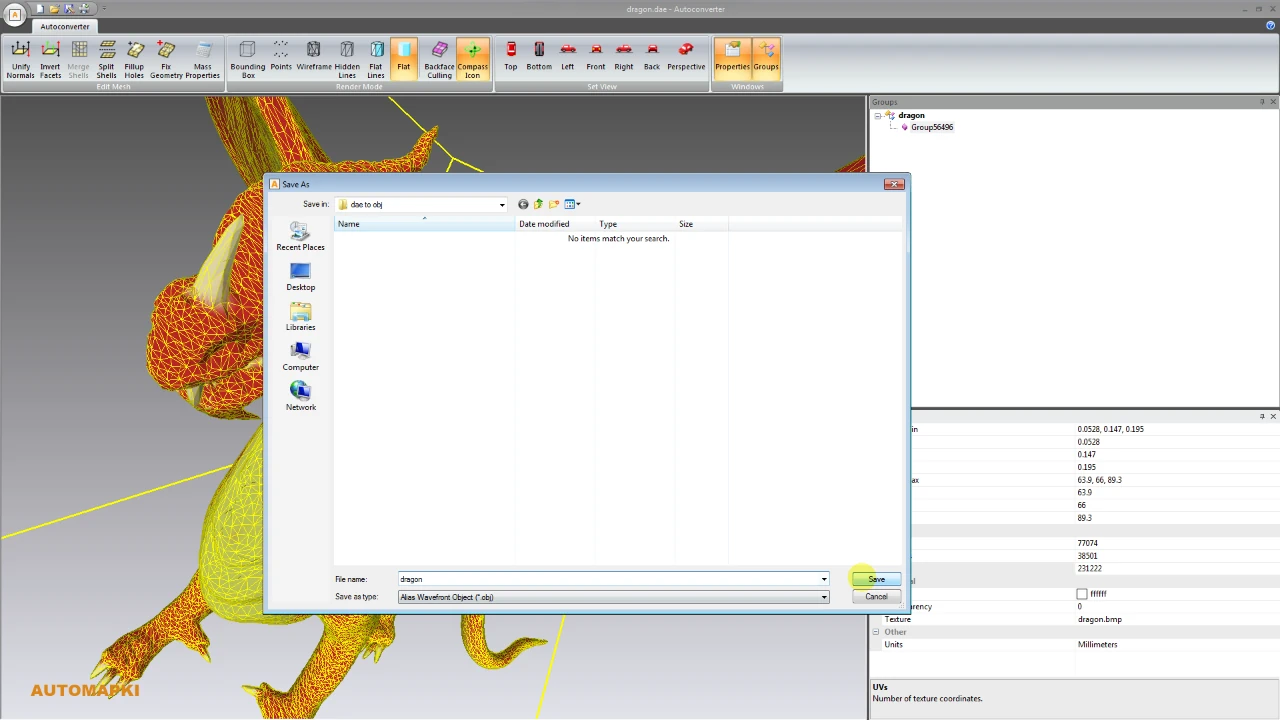
Click Save As…, select Wavefront OBJ (*.obj) from the file type dropdown, choose your output filename and destination, then click Save. Autoconverter writes the OBJ file alongside an MTL material file and any referenced texture images - keep all three in the same folder for correct material display in the target application.
💾 Export to Other Formats if Needed
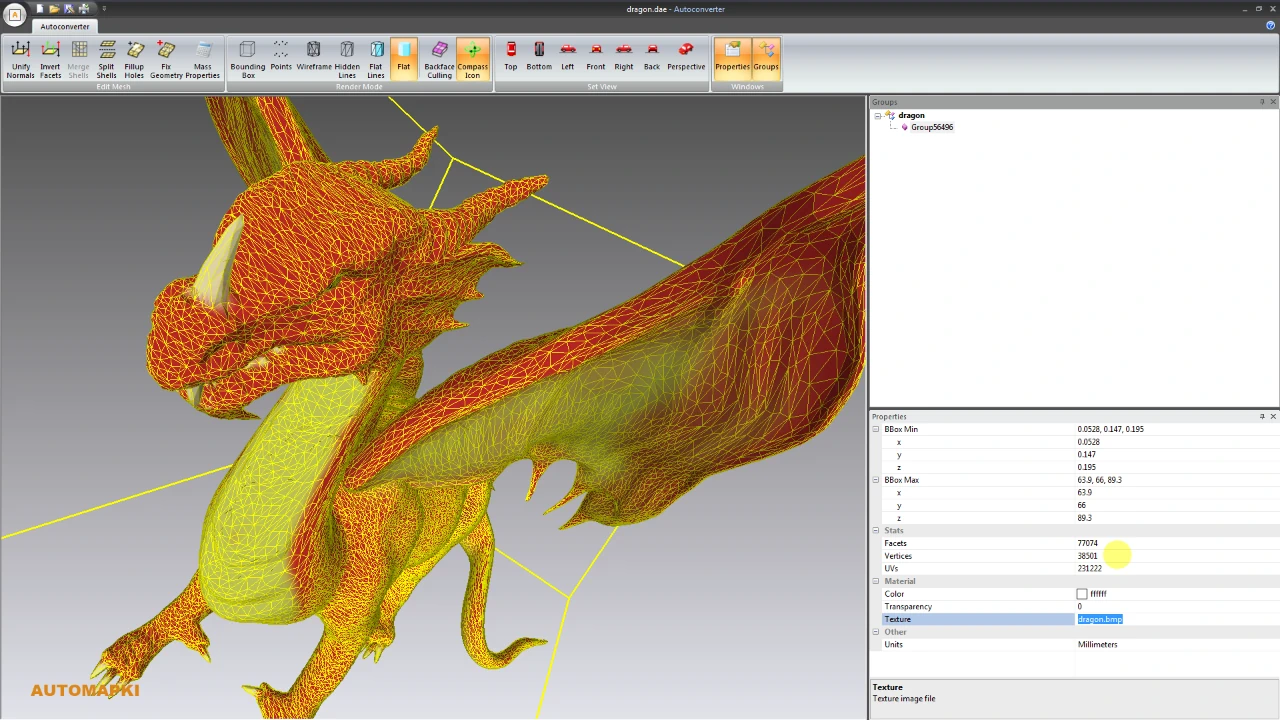
From the same loaded DAE file, repeat the Save As step to export to additional formats without reopening the file. Commonly used alternatives from a DAE source include FBX for game engines and animation pipelines, SKP for SketchUp architectural and visualization workflows, 3DS for legacy Autodesk 3ds Max compatibility, and STL for 3D printing.
Frequently Asked Questions
-
Will textures from the DAE file appear in the OBJ output?
Yes. Autoconverter exports texture maps from the DAE file as separate image files and references them in the MTL file alongside the OBJ. When importing the OBJ into Blender, Maya, or another application, keep the OBJ, MTL, and texture files in the same folder for materials to load correctly.
-
Does converting DAE to OBJ preserve animation?
No. OBJ is a static geometry format with no support for animation. The exported OBJ represents the mesh in its default pose. If animation must be preserved, export to FBX instead.
-
Can I convert DAE files exported from SketchUp?
Yes. SketchUp exports DAE natively and Autoconverter reads those files correctly, preserving geometry, materials, and component structure from the SketchUp model.
-
Can I convert OBJ back to DAE?
Yes. Autoconverter supports both directions - open an OBJ file and use Save As to export it as DAE. The same applies to FBX, SKP, and other supported formats.
-
Is there a free trial?
Yes. The free evaluation version of Autoconverter supports up to 10 file conversions. The full licensed version provides unlimited conversions and batch processing for converting entire folders of DAE files at once.
Summary
Converting COLLADA DAE to OBJ gives you a lighter, more universally compatible version of your 3D model without animation or scene overhead. Autoconverter handles the conversion in four steps, preserving mesh geometry, materials, and textures, and supports exporting to FBX, SKP, 3DS, STL, and STEP from the same source file.
👉 Ready to convert? Download Autoconverter and try it free for up to 10 conversions.