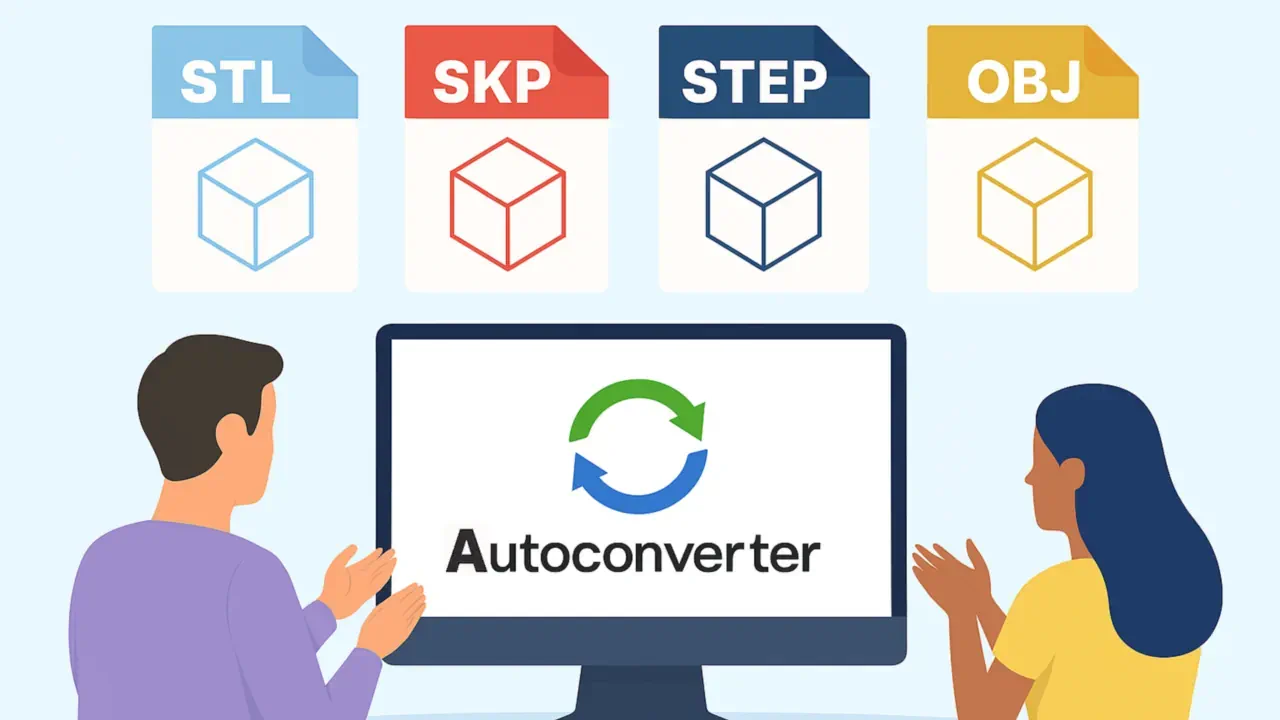
Choosing the wrong 3D file format means extra conversion steps, lost geometry data, or incompatibility with your target application. STL, OBJ, STEP, and SKP are four of the most commonly used 3D formats - but they serve fundamentally different purposes. This guide explains what each format actually is, when to use it, and how to convert between them.
STL - The 3D Printing Standard
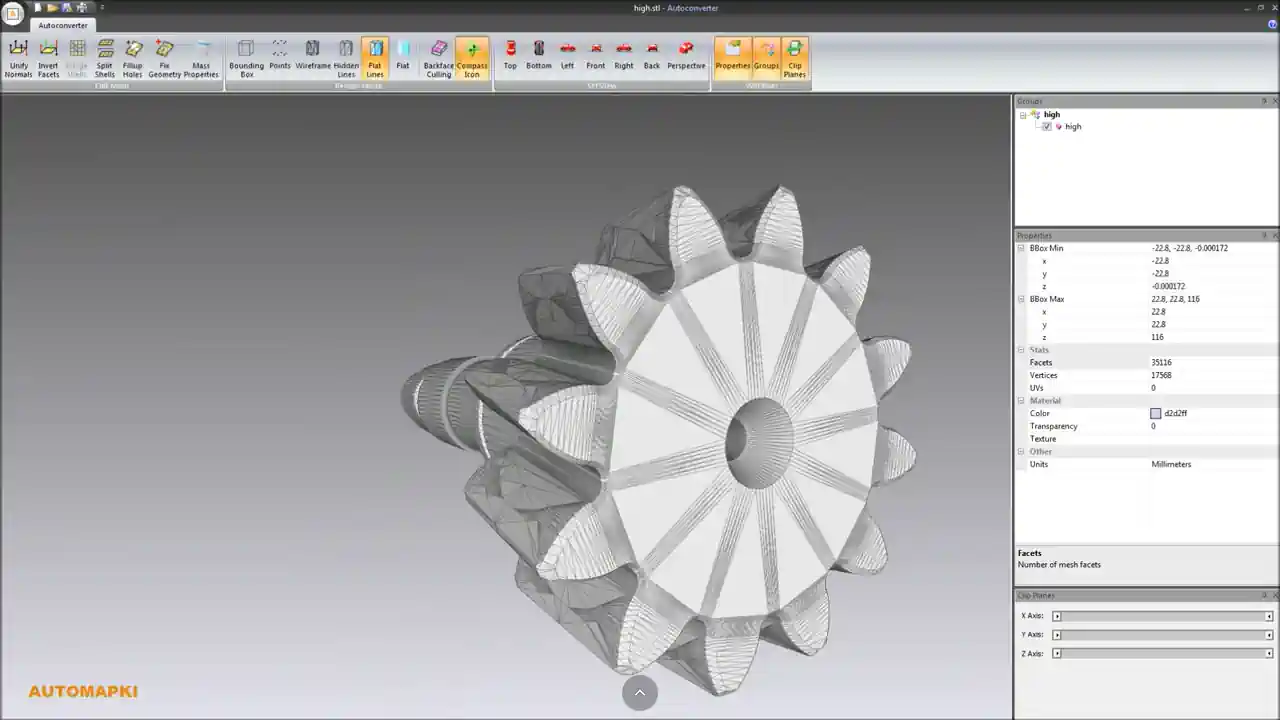
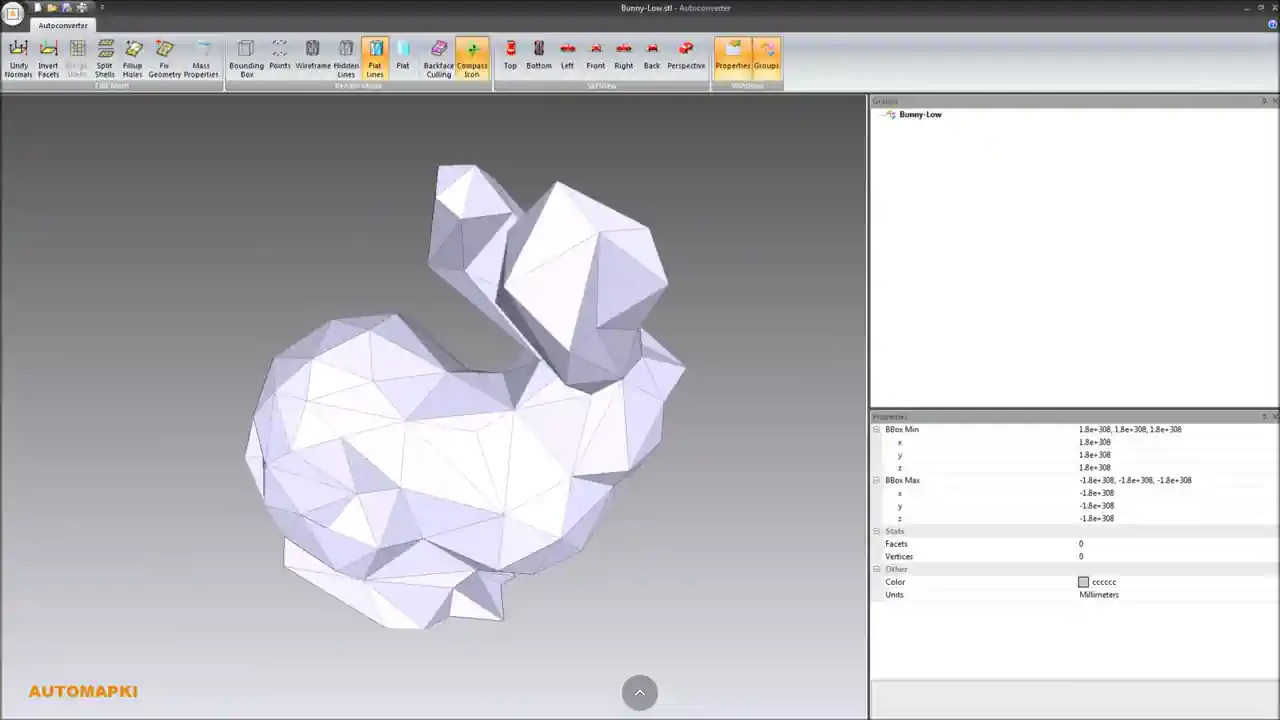
STL (Stereolithography) stores geometry as a mesh of flat triangles. It is the de facto standard for 3D printing - every slicer (Cura, PrusaSlicer, Bambu Studio, Chitubox) accepts STL, and virtually every 3D printing service bureau requires it.
What STL does well: universal slicer compatibility, simple format that any 3D tool can read, small file sizes for low-to-medium polygon models.
What STL cannot do: store colors, textures, or material assignments; represent smooth curves mathematically (everything is tessellated into flat triangles); store assembly structure or part names; support parametric editing.
Use STL when: submitting models for 3D printing, exporting to slicers, or sharing geometry with tools that accept nothing else. Avoid STL when the recipient needs to edit the model as a solid in CAD, or when smooth surfaces matter and file size allows a better format.
OBJ - The General-Purpose Mesh Format
OBJ (Wavefront Object) is a plain-text polygon mesh format that carries an optional MTL material file with texture references. It is the most universally supported format in the 3D design, animation, and rendering world - Blender, Maya, 3ds Max, Cinema 4D, Unity, Unreal Engine, and virtually every DCC tool reads OBJ.
What OBJ does well: broad compatibility across all design and rendering tools; supports UV-mapped textures and multiple material groups; human-readable text format that can be inspected or edited manually.
What OBJ cannot do: store animations, skeletal rigs, or blend shapes (use FBX for those); represent engineering NURBS geometry; store assembly hierarchy or part attributes beyond basic material names.
Use OBJ when: sending models to Blender, Maya, rendering tools, or game engines for visualization - especially when textures need to survive the transfer. OBJ is also the safest neutral format for archiving mesh geometry that needs to be opened in any future tool.
STEP - The Engineering CAD Standard
STEP (ISO 10303) stores geometry as mathematically precise NURBS surfaces and solid bodies - the exact same representation used inside SolidWorks, CATIA, Creo, NX, and Inventor. Every curve is stored as an equation, not as approximating triangles, so STEP geometry is always accurate regardless of zoom level or manufacturing tolerance.
What STEP does well: mathematically exact geometry; preserves solid bodies for Boolean operations and engineering analysis in the target CAD system; stores assembly structure, part names, and colors; accepted as the standard interchange format across all professional CAD tools; supported by ISO as a neutral, vendor-independent standard.
What STEP cannot do: store textures, animations, or polygon mesh geometry; be directly used by 3D printers (must be converted to STL or OBJ first); be edited in non-CAD tools like Blender.
Use STEP when: exchanging precision geometry between engineering CAD systems (SolidWorks ↔ CATIA, Rhino → Inventor, AutoCAD → Creo), preparing models for CNC machining or manufacturing, or delivering parts to engineering partners who need exact NURBS geometry rather than tessellated mesh.
SKP - The SketchUp Format
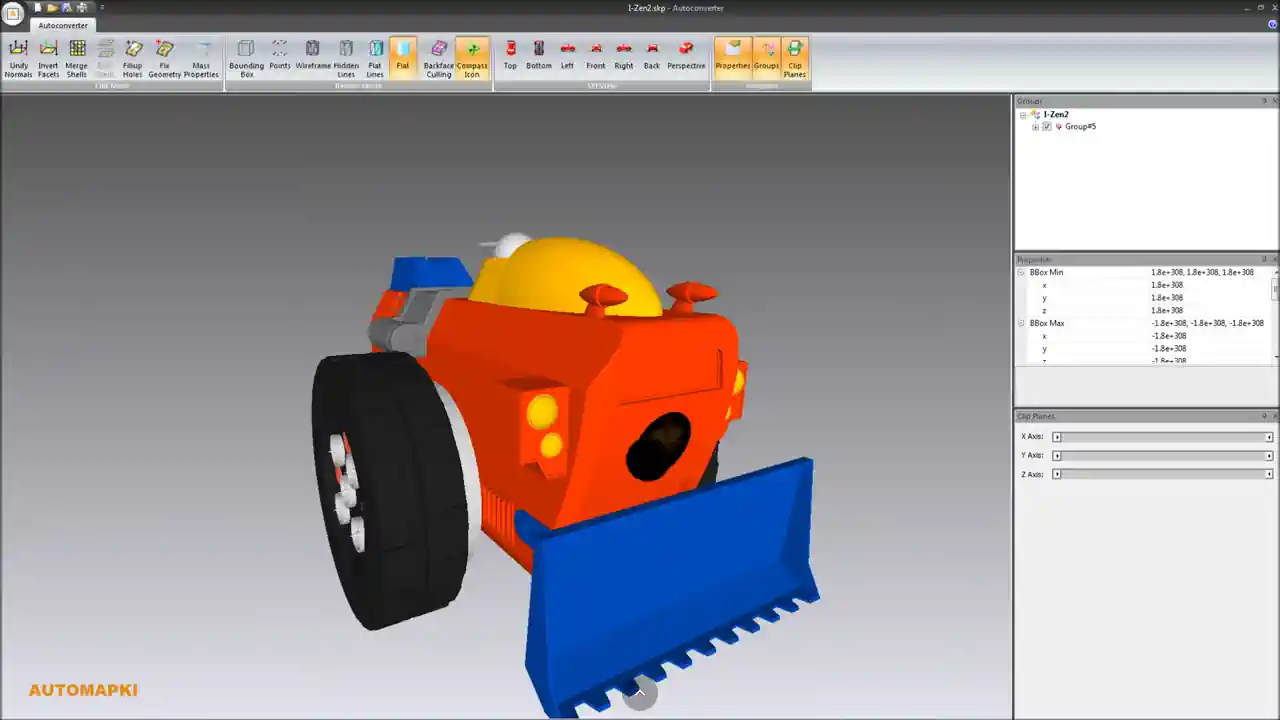
SKP is the native format for Trimble SketchUp. It stores polygon mesh geometry alongside materials, textures, components (reusable block instances), layers/tags, scenes, and annotations in a compact binary file. SKP is widely used in architecture, interior design, landscape design, and urban planning.
What SKP does well: efficient storage of architectural models with textured materials; component system for reusable geometry (similar to CAD blocks); scenes for saving multiple camera views; direct access to SketchUp's 3D Warehouse model library; compact file sizes for complex architectural scenes.
What SKP cannot do: store engineering NURBS geometry; be opened natively in engineering CAD tools without conversion; carry animation or skeletal rigs; represent true curved surfaces (all geometry is faceted polygon mesh).
Use SKP when: working in SketchUp or sharing models with architects and designers who use SketchUp, delivering models that will be imported into other tools from SketchUp's ecosystem, or publishing to the SketchUp 3D Warehouse.
When to Convert Between These Formats
The most common cross-format conversions and the right tools for each:
- STEP to STL - engineering model to 3D printer; use Autoconverter; adjust tessellation quality for smooth curves. See the STEP to STL guide.
- STL to STEP - 3D scan or print file to engineering CAD; requires mesh repair and produces faceted BREP solid, not true NURBS. See the STL to STEP guide.
- SKP to OBJ - SketchUp model to Blender, Maya, or rendering pipeline; use Autoconverter. See the SKP to OBJ guide.
- STEP to SKP - engineering CAD model to SketchUp visualization; use Autoconverter; NURBS surfaces are tessellated to polygon mesh. See the STEP to mesh guide.
- OBJ to STL - rendering mesh to 3D printing; use Autoconverter batch mode. See the batch conversion guide.
Summary
STL is for 3D printing. OBJ is for visualization and rendering. STEP is for engineering CAD. SKP is for SketchUp. Each format is the right choice for its intended workflow and the wrong choice outside it. Autoconverter converts between all four formats - and 30+ others - on Windows without requiring the source application to be installed.
👉 Ready to convert? Download Autoconverter and try it free for up to 10 conversions.